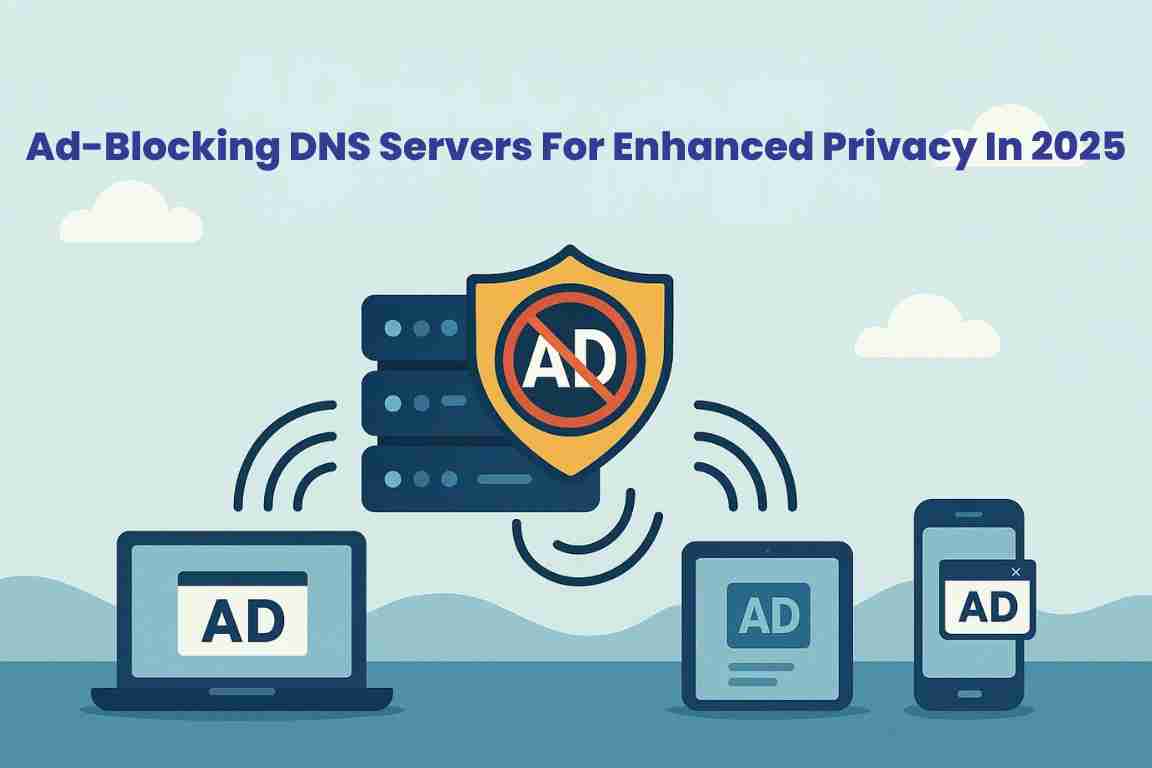
Ad-Blocking DNS Servers: A Cornerstone for Enhanced Privacy in 2025
Because digital technology is using more and more data, staying private online has never been more important. In 2025, talking about protecting our personal information and keeping control of our digital experiences is becoming more urgent. At the core of this movement are ad-blocking DNS servers, serving to lower ad annoyances and also offer strong safeguards for user privacy.
Online Tracking’s Growth and the Reasons for DNS-Level Protection
The internet now is very different from how it began years ago. A simple system for sharing information has developed into something driven by targeted ads and elaborate data collection. Your behaviour on websites and while using apps is always being tracked by many to create detailed files for ad personalization or worse, to be exploited for other purposes.
To start, I’ve counted on traditional ad blockers that act as browser extensions. Still, it’s becoming clear that their drawbacks are growing. These tools philtre content after it becomes available in your browser. Even without the visual ads, your browser continues to request data from ad and tracker domains which could expose what sites you visit.
Table of Contents
How DNS-Based Ad Blocking Works: A Network-Wide Shield
Now, DNS ad blocking takes centre stage. By using this approach, companies adopt a standpoint that is probably more successful. When you try to access a webpage, your device has to look up the domain names of everything it sees, including the site and all the ads, trackers and analytics scripts into their IP addresses first. That’s where the Domain Name System (DNS) comes into play.
An ad-blocking DNS server gets involved in each request. It keeps a regular list of websites identified as engage in advertising, tracking and spreading malware. If your device queries a domain that matches an entry on this blocklist, the DNS server does one of two things: it either refuses the request entirely or redirects it to a non-routable IP address (like 0.0.0.0). Because of this, no ad or tracking service is allowed, stopping them early on.
This method offers several significant advantages over traditional browser extensions:
- System-Wide Protection: A DNS-based ad blocker protects all devices connected to your network – computers, smartphones, smart TVs, IoT devices – without needing individual software installations.
- Enhanced Privacy: By stopping ad and tracker requests at the DNS level, your device never even attempts to connect to these intrusive domains, significantly reducing the data points that can be collected about your online activity.
- Improved Performance: Since unwanted content is never downloaded, webpages load faster, and bandwidth usage is reduced, leading to a smoother and more efficient Browse experience.
- Protection Against Malvertising: Many ad-blocking DNS services also incorporate lists of known malicious domains, providing an additional layer of defense against malware and phishing attempts that often leverage advertising networks.
The Privacy Imperative: Why Ad-Blocking DNS is Crucial in 2025
Because of the increasing privacy issues in 2025, using ad-blocking DNS servers is now a necessary part of protecting yourself online. Because both data harvesting and the risk of misusing information are on the rise, we should take early steps.
When you use the Internet, DNS queries hide information that describes much of your online behaviour. If you use their services, ISPs and others might monitor what you look at and use the data to profile you. By routing your DNS queries through a privacy-focused ad-blocking DNS server, you gain:
- Reduced Data Collection: The DNS server itself is committed to not logging your Browse data, protecting your digital footprint from being collected and sold to third-party brokers.
- Shielding from Targeted Advertising: By blocking tracker domains, you reduce the ability of advertisers to build detailed profiles of your interests, leading to a significant decrease in targeted and often intrusive advertisements.
- Protection from DNS-Based Threats: Encrypted DNS protocols like DNS-over-HTTPS (DoH) and DNS-over-TLS (DoT) are becoming more prevalent. Using these protocols, DNS requests are protected and ISPs and other snoopers are not able to learn which websites you’re visiting. Now, major ad-blocking DNS companies include DoH and DoT, giving users an extra protection of privacy and security.
Best Ad-Blocking DNS Servers to Improve Privacy in 2025
Selecting a good ad-blocking DNS server means making sure it offers a good balance of speed, dependability and, above all, strong privacy features. In 2025, several providers stand out for their commitment to user privacy and effective ad-blocking capabilities:
- AdGuard DNS: A popular choice for its comprehensive ad and tracker blocking, coupled with strong privacy features. AdGuard DNS is always working on new innovations and its tools provide choices for filtering and parental control. Connexions run through both DoH and DoT, providing secure DNS query transmission.
- NextDNS: This relatively newer player has gained significant traction for its highly customizable filtering rules and impressive transparency. Using NextDNS, you can choose from numerous blocklists designed for ads, trackers, malware and even different types of content. DoH and DoT are also completely supported by its network.
- Quad9: For users prioritizing security alongside privacy, Quad9 is an excellent option. It prevents computers from visiting malicious websites and acts against phishing and malware. It is important to this provider that data privacy is respected and that its service uses DoH and DoT.
- Control D: Offering a robust set of features for content filtering and ad blocking, Control D provides a user-friendly interface for customizing your DNS experience. You can choose which content to block and create unique profiles to manage everything better.
- Cloudflare (1.1.1.1 + WARP): While not primarily an ad-blocking DNS, Cloudflare’s 1.1.1.1 resolver is renowned for its speed and privacy commitment (not logging user IP addresses). When you use WARP with their client, it ensures your connexions are safe and can only route your traffic through dynamic IP addresses. Some people use ad-blocking along with other network tools or by using browser add-ons.
Looking Ahead: The Future of Privacy with DNS
With time, more people will use ad-blocking DNS servers in 2025 since they learn about their right to online privacy and the tools they can use. Soon, most routers could come with improved detection of threats and more precise control over network access.
The contest between advertisers and those who advocate for privacy will keep affecting how the digital world looks and functions. Instead, DNS servers that block ads make it easy for people to block harmful advertisements, see a cleaner web and enhance their online privacy in this day and age. Adopting an ad-blocking DNS server is both costless and helps secure your online privacy.