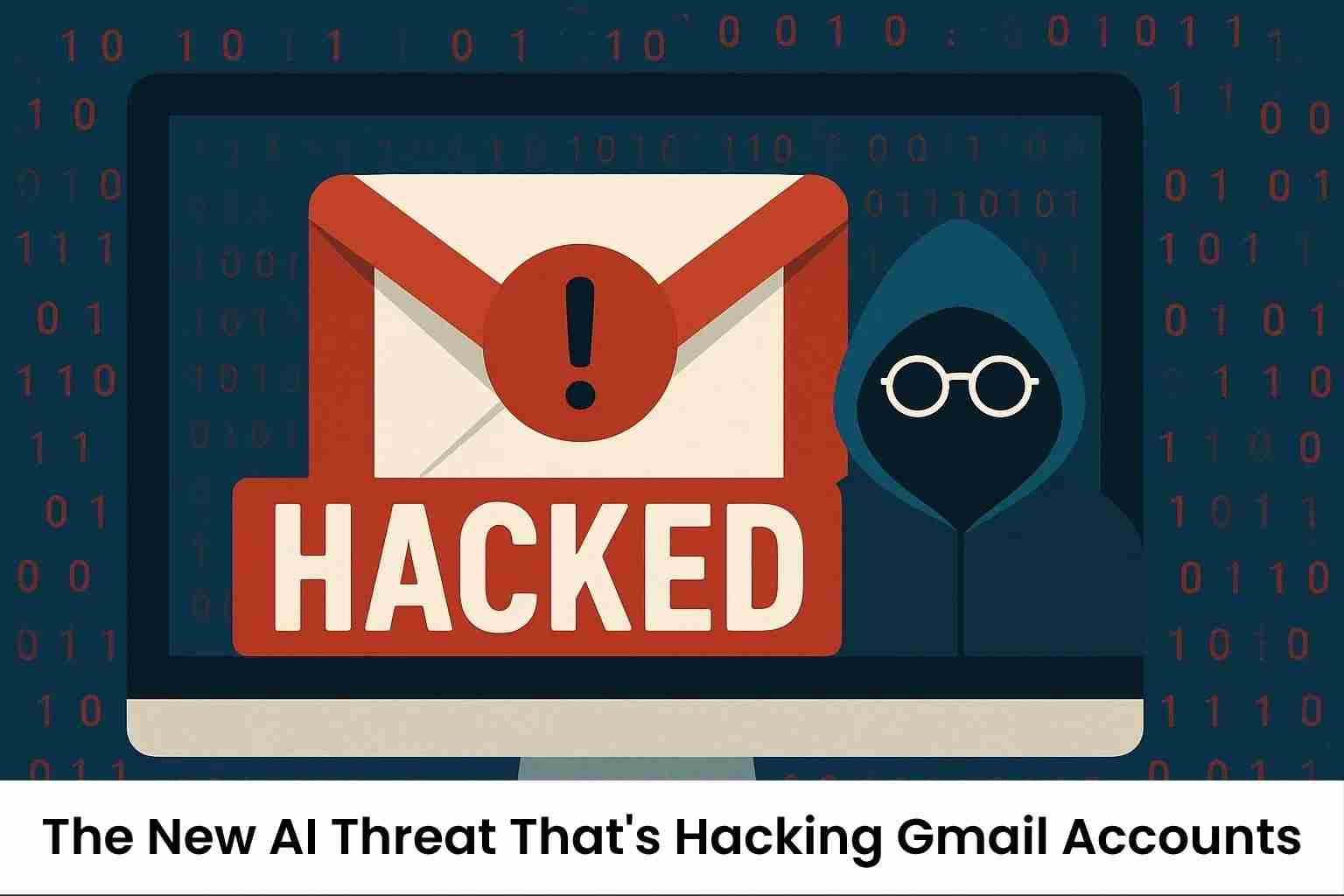
The New AI Threat That’s Hacking Gmail Accounts
In this dynamic space of cybersecurity, a recently discovered and terrifying threat is finding its way in, wielding the potential of artificial intelligence to hack and use the email accounts, and predominantly the ones on the ubiquitous Gmail. They are not the old, poorly stated phishing scams. Rather, there has emerged a new breed of advanced, AI-powered assaults that are proving to be critically successful, making it increasingly difficult to determine what is communicated not as a threat, but as good. It is no longer about spotting a typo; it is about being able to cut through the unexpected psychological and contextual clues AI can now replicate perfectly.
The History of the Phishing Fraud
Phishing is an old trick in the book of cybercrimes, as social engineering has always been a strong tool to make users give away their confidential information. It is likely that the typical phishing email was quite easy to recognise: bad grammar, generic greetings, and links that do not conduce to their appearance. But with the introduction of the so-called strong large language models (LLMs), threat actors have received a new and powerful means.
The process of the AI-driven phishing work
Table of Contents
Phishing with the use of AI is like taking a quantum leap forward. Rather than the standardised, one-size-fits-all emails, AI enables the sender to craft hyper-personalised messages at a large scale.
- Data Harvesting: Malicious AI agents scrape vast amounts of publicly available data from social media, professional networking sites like LinkedIn, and corporate websites. This information gives a clear profile of the target, including the role played and who they communicate with, as well as the person being a distinct communicator.
- Impersonation and Style Mimicry: Using this harvested data, the AI can then craft emails that not only have perfect grammar but also convincingly mimic the tone, language, and even the specific vocabulary of a trusted contact. An e-mail that seems to be sent by a boss, a bank, or a colleague now is entirely realistic, so it has become extremely hard to detect a fake one.
- Multi-Channel Deception: The threat extends beyond email. Malicious users are integrating the AI-generated email with other tools like voice cloning and deepfakes. A victim may get an over-personalised email, followed by a phone call by an AI-generated voice impersonating the same person, all coordinated to trick them into a full-service and realistic identity that will shake off the inherent doubt in a person.
The Multilayered Attack Vectors
The new AI threat is not one-dimensional; it is a multi-vector mode of attack that aims at circumventing just about every form of security. They are carefully orchestrated in order to take advantage of human trust, where, through trickery or subterfuge, they are so successful at deceiving victims that recent studies have found that phishing, even with the use of AI, is now performing better in deceiving its intended victims than human security experts, so-called red teams (ethical hackers).
Vishing and Deepfakes: Beyond the Inbox
The worst thing about this new threat is that it is able to transcend email. Voice phishing (vishing) is becoming common, and hackers are employing voice cloning to imitate CEOs or other people in positions of authority. An example occurred recently when a senior executive fell victim to the cloning of her voice on a public audio recording and was convincingly used in the deepfake video-based conference to dupe an employee into submitting millions of dollars. Such assaults work on the weaknesses of our dependence on human-to-human communication and the fact that we trust a voice we know.
The Rotation of the Exposure to People and the Companies
As far as the consumers are concerned, they are at risk of account takeover, which involves identity theft and theft of money. The entry to a Gmail account frequently becomes a backdoor to other applications, such as cloud storage, banking apps, and social media, so the possibility of a solo breach is devastating. In the case of companies, the risks are even more colossal, as companies may face a significant loss of finances, exposed data, and grievous reputation.
7 Ways You Can Protect Yourself in the Age of A.I. Threats
Since cybercriminals take advantage of AI, vendors of the technology used and the end users are obliged to remain vigilant. As Google constantly improves its security, that is now more important than it ever has been; today defence and offence are the game.
Essential Safeguards and Best Practices
- Enable Two-Factor Authentication (2FA): This is the single most important step you can take. You add a significant protection because a hacker who has only your password cannot crack this powerful protection requiring a second form of verification, which will be a code sent to you via phone or a physical security key.
- Be Sceptical of Unsolicited Contact: Be suspicious of any email, text, or phone call that requests sensitive information, even if it appears to come from a trusted source. Google will never call you over the telephone and request you to provide them your password or verification codes. Do not click on the weblink in an email, but open the security page of your Google account to see whether you are alarmed or not.
- Stay Informed and Educated: The best defence is awareness. Find out that AI can create what seem to be optimised, personal scams. Always be wary of those emails that put you under pressure to respond and act urgently, ones that have odd requests, whether the information of the sender appears accurate or not.
The fight against cybercrime attains a new level. It is the competition of defensive AI versus offensive AI, and at this moment the offensive AI is showing us an eye-opening new ability. With remaining alert and high security, we can create our own barriers and safeguards to ensure that we are safe against this novel form of hacking.